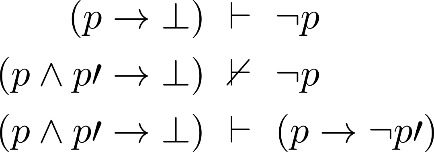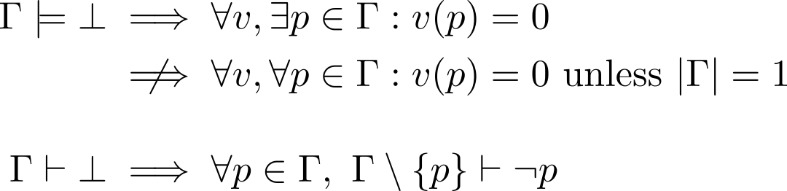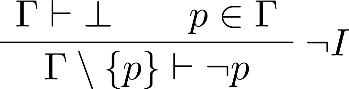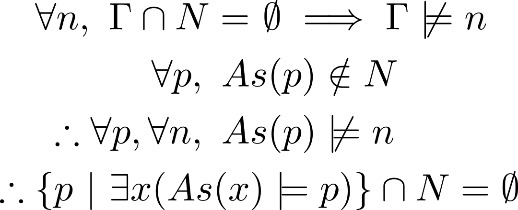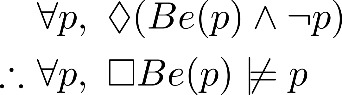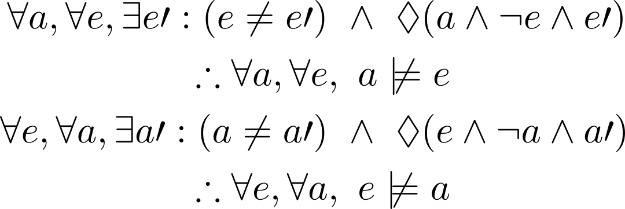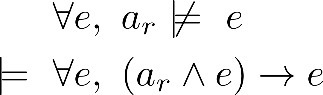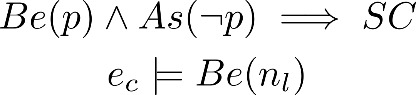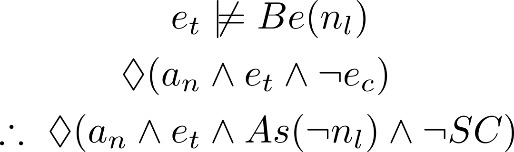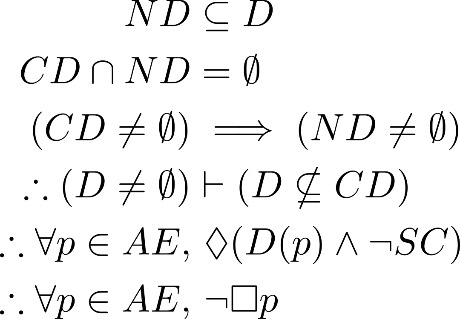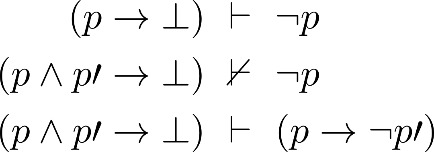

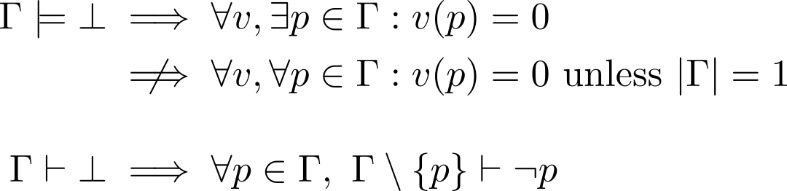

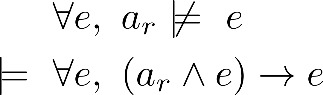
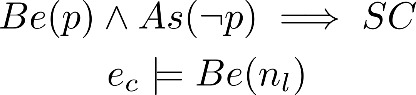
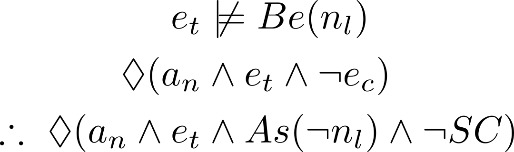






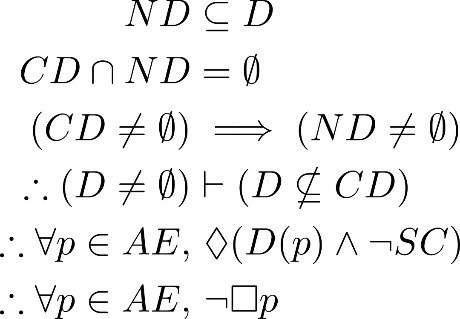
Hans-Hermann Hoppe’s argumentation ethics (AE) is an argument which claims to prove the libertarian private property ethic (the nonaggression principle, or NAP) to be true. AE utilizes a transcendental argument (Hoppe 2020, 12) to claim that the NAP is true a priori. The nature of this argument will be explained further as this article proceeds.
By “AE,” we refer only to Hoppe’s theory. Many other arguments related to or derived from AE exist, such as those of N. Stephan N. S. Kinsella (1992), Frank van Dun (2009), Konrad Graf (2011), and Hatim Kheir (2023). These are all outside of our scope, and we do not claim to disprove them, although our critiques may tangentially apply to other arguments.
Since its introduction in 1988, AE has received continuous critiques and defenses. Hoppe did not directly respond to critics after 1988 until a 2016 lecture given to the Property and Freedom Society, which also contains several clarifications about AE. We will therefore default to Hoppe (2016) as our primary text.
Previous critiques have largely not directly critiqued AE’s application of transcendental arguments. Murphy and Callahan (2006), which encapsulates many early critiques, grants it for the sake of argument and attempts to target other gaps in AE, claiming that AE only applies during argumentation and that AE conflates use with ownership, for example. Much of the critical and defensive literature since has revolved around such critiques.
There are, however, several exceptions. Douglas Rasmussen (1988, 50–52) raises many arguments relevant to AE’s transcendental argument: He claims that argumentation is avoidable, that one can argue with oneself, and that AE must assume a normative premise of self-consistency, therefore failing to avoid the is-ought gap (also noted by Machan 1988, 52). Another critic of AE’s use of transcendentalism is Ilja Schmelzer (n.d., 4–16), who argues that performative contradictions could possibly falsify only a select few norms.[1] Schmelzer (n.d., 21) also argues, in response to van Dun (2009), that argumentation has no inherent aims or purposes. Hoppe (2016, secs. 4–6) argues extensively for the view that argumentation has inherent purposes. However, the only other critic of this notion is Roderick Long (2004), who only mentions it in passing.
Given the centrality of these aspects of AE, we hold that critiques of Hoppe’s transcendental argument and critiques of his argument from purposes are underrepresented in the critical literature. We hold that such critiques can expose several fundamental flaws in Hoppe’s arguments.
Context and Assumptions
Throughout this article, we assume the validity of classical logic.[2]
Hume’s law is the claim that norms or moral facts cannot be proven from nonnorms or descriptive facts alone. As per Gillian Russell (2022), we hold that a limited version of Hume’s law is true, and that it is analogous to various other logical non sequiturs, such as deriving future from past facts and deriving universal from particular facts.
Russell’s paper should be read in full, but we summarize her argument as follows: Norms are propositions whose truth-value would change if we only changed which possible scenarios count as morally ideal; in contrast, the truth-value of descriptive facts would not change under such a shift. Therefore, norms depend on something independent of descriptive facts. Therefore, norms cannot be proven or disproven by descriptive facts alone, unless those facts prove or disprove a norm no matter what counts as morally ideal. AE does not attempt to prove that one would be obligated to follow the NAP even if no one would follow the NAP in an ideal world. Therefore, AE does not meet Russell’s “unless” clause. Therefore, we hold that Hume’s law applies to AE (as does Hoppe [1993] 2006, 345).[3]
Between 1976 and 2017, Hoppe repeatedly endorsed the consensus theory of truth (Hoppe 1976, 106, 1987, 11–12, [1988] 2010, 164; Slenzok 2022, 53). This theory claims that the “truth” is what is justifiable in an ideal discussion, or what a group of ideal arguers would reach consensus upon. It is opposed to the correspondence theory of truth—the idea that the “truth” is what corresponds to reality (Hoppe 1976, 95, 1987, 12).[4]
However, while the consensus theory sounds like it would entail a significantly different view of reality, we must clarify that it is a definition of the word “truth”; it is what Hoppe ([1988] 2010, 164) believes the truth “has to be defined as” (see also Hoppe 1987, 12). The consensus theory of truth is not a theory about what does or doesn’t exist in reality (Hoppe 2016, sec. 4), because it explicitly defines the word “truth” as something other than what corresponds to reality.
Hoppe’s appeals to this definition must drastically affect our interpretation of AE because Hoppe is often unclear about whether he is arguing that the NAP exists or that it is uniquely justifiable in discourse. For example, Hoppe ([1993] 2006, 341, 2016, sec. 3) claims to “falsify” and “refute” “ethical proposals.” In A Theory of Socialism and Capitalism, Hoppe ([1988] 2010, 152–54) uses ethical/moral language extensively and argues that “‘ought’ statements” must be truth-apt (i.e., capable of being true or false), which would be inexplicable unless he were trying to prove or disprove them.[5] He states that “true, objective, or valid [are] used synonymously here” and then that “reason can claim to yield results in determining moral laws which can be shown to be valid a priori” (Hoppe [1988] 2010, 154, 156). On the other hand, Hoppe ([1993] 2006, 345) also claims that AE “remains entirely in the realm of is-statements” and that its conclusion that “no deviation from [the NAP] can be argumentatively justified” is an “a priori true is-statement.”
If Hoppe were consistently using the consensus definition of truth, he would have no reason to call a justifiable norm an “is-statement,” but if he were consistently using the correspondence definition of truth, he would not claim to falsify ethical proposals while also accepting and claiming not to violate Hume’s law (Hoppe [1993] 2006, 345).
There are only two satisfactory interpretations of AE that can explain this discrepancy:
-
AE proves that the NAP exists in reality but does not entail it from descriptive premises because of AE’s use of a transcendental argument.
-
AE proves the NAP under the consensus definition of truth but not the correspondence definition. The NAP is uniquely justifiable in discourse but may not exist in reality.
We will directly refute possibility (a) before making arguments applicable to both (a) and (b). We believe that Hoppe likely holds to (b). However, we will refute both because we may be wrong about what Hoppe believes, we are primarily interested in AE insofar as it may prove that the NAP exists, and most readers will likely already understand the truth to be what corresponds to reality.
1. Transcendentalism Cannot Establish Norms
Here we refute interpretation (a), and we assume that Hoppe holds to (a) for the sake of this refutation. We assume that the truth is what corresponds to a mind-independent reality and therefore also assume that idealism (the notion that the mind creates reality) is false. We demonstrate that a transcendental argument for a norm is impossible under these assumptions.
AE seeks to prove the NAP while avoiding the issue of Hume’s law. In order to do this, Hoppe claims that the NAP is true a priori, meaning true prior to empirical evidence. In Hoppe’s ([1995] 2007, 18) view, if one cannot deny a proposition without self-contradiction, then the proposition is true a priori. This is a type of transcendental argument.
We can compare Hoppe’s argument to how Aristotle grounds the law of identity. The proposition “1 ≠ 1” is self-contradictory and is therefore impossible, meaning that its negation, “1 = 1,” is true and cannot be denied without contradiction. However, “The NAP is false” is perfectly coherent as a proposition, and thus Aristotle’s method cannot be used to prove the NAP.[6]
What, then, is contradictory about the statement “The NAP is false”? Hoppe (2016, sec. 4) claims it is equivalent to saying “Humans don’t speak,” writing, “A skeptic could certainly deny that humans act, speak and argue . . . and in doing so he would not become involved in a formal, logical contradiction. But in making this claim he would be involved in a performative, pragmatic or dialectic contradiction, because his words would be refuted by his actions, i.e., by the very fact of claiming his words to be true” (see also Hoppe [1993] 2006, 341). Therefore, according to AE, there is no contradiction in the proposition “The NAP is false” itself. Rather, there is a contradiction in the act of making the statement.[7]
To understand this concept of a performative contradiction, we must understand what we can call internal versus external contradictions: Any proposition which implies a contradiction is inherently false. For example, “Snow is white and not white” is impossible. On the other hand, two propositions can always contradict each other without proving that either one is false. For example, “Snow is white” and “Snow is not white” cannot both be true, but this fact alone does not prove that both are false, nor does it determine which one is false—the contradiction is external to either proposition. An inherently falsifying contradiction must always be internal. Nevertheless, if two propositions cannot both be true, and one proposition is proven true, then the other must be false.
Applying this to Hoppe’s example, saying “Humans do not speak” is not an internal, logical contradiction. Rather, the occurrence of the statement and the content of the statement externally contradict each other. Making the statement proves that humans do speak, because if they did not speak, then I could not have made the statement. This type of proof is an example of modus tollens, and it is a valid argument. Indeed, this is the only valid way performative contradictions can work: They don’t falsify statements by a contradiction alone; they falsify statements by proving that something that is contradictory to a person’s statement is true.
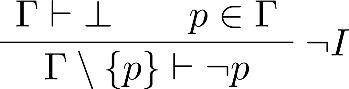
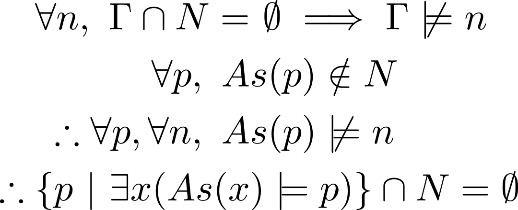
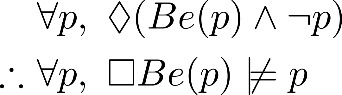
However, if this is what performative contradictions are, it is impossible for them to prove or falsify normative statements. Hoppe ([1993] 2006, 341) can claim that “nonlibertarian ethical proposals are falsified by the reality of actually proposing them” only if the descriptive fact of argumentation directly entails the NAP; that is, Hoppe can only make this claim if he violates Hume’s law. Norms only imply what we should do, not what we can or cannot do, and because of Hume’s law, this derivation is fundamentally a non sequitur. Norms, therefore, cannot be preconditions of an argument against them and cannot be implied by an argument against them. In addition, logical transitivity means that anything argumentation implies will also be incapable of proving any norms. This method therefore must fail.
How else might Hoppe’s transcendental argument work? Sometimes, Hoppe describes transcendentalism as we do (Hoppe [1995] 2007, 22), but he has also stated, “[a priori propositions] are self-evident because one cannot deny their truth without self-contradiction; that is, in attempting to deny them one would actually implicitly admit their truth” (Hoppe [1995] 2007, 18).
Applied to AE, this could only mean that the NAP is true because we must “admit”—that is, “believe”—it is true. Indeed, Hoppe (2016, sec. 1) does not directly describe norms as a precondition of argumentation but does claim that they are a necessary presupposition of argumentation. However, this would be a blatantly invalid argument. Any argument from “One believes A” to “A is true” can only be valid if our beliefs or mental states create reality, which is a notion that Hoppe ([1995] 2007, 19–20) explicitly rejects. In reality, it is always possible for us to believe or presuppose something that is incorrect. Indeed, insofar as the truth is what corresponds to a mind-independent reality, the truth is independent of our beliefs or presuppositions by definition. Therefore, presuppositions cannot prove true statements.
These issues are not particular to AE; we may extend them to any transcendental argument made from the preconditions of any action or fact. A typical example of a transcendental argument would be that thinking “reality does not exist” proves that it does exist, because reality existing is a precondition for the possibility of thought, not because reality is a presupposition of thought.[8]
However, no norm is a precondition for the possibility of any fact about the world under Hume’s law, including cognition or argumentation. Therefore, even though there is a myriad of interpretations of transcendentalism, we can say that under Hume’s law, any transcendental argument claiming to prove an objective norm is a non sequitur unless one believes that reality does not exist independently of the mind.
Therefore, we are left with no options for what Hoppe’s transcendental argument could be. By giving up the ground of internal, logical contradictions, the AE must prove NAP true from descriptive premises before the performative contradiction can prove or falsify anything. Yet AE gives us no reason to accept that the NAP is true except for the supposed argument from contradiction. Therefore AE, or any normative transcendental argument, at best requires its own conclusion to justify its premises. Because of this, it would be categorized as a circular argument and an unjustified assertion.
We can now step back from our assumption of possibility (a). Under the correspondence theory of truth, the truth refers to what corresponds to reality. Because AE fails as a proof under this definition, we can therefore say that AE fails to demonstrate that the NAP corresponds to reality, no matter what definition of “truth” we use.
Therefore, before moving on to any other arguments, we can already conclude that AE cannot prove that reality morally or normatively binds anyone to follow the NAP. If AE proves anything about the NAP, it can only be as a mental or social construct and not as a mind-independent fact.
2. Actions Have No Constitutive Purposes
Here we make a refutation that applies to both interpretations (a) and (b). We do not assume either theory or definition of truth. We demonstrate that AE does not prove that the NAP is presupposed by inherent purposes of argumentation.
AE claims that the right to self-ownership and, by extension, the NAP, are presuppositions of argumentation. AE uses two logically but not explicitly distinct arguments to make this claim. Firstly, AE claims that normative argumentation has inherent purposes which are contradicted by denying the NAP. Secondly, AE claims that in all argumentation we implicitly recognize and affirm self-ownership for ourselves and our interlocutors (Hoppe 2016, sec. 1).[9]
The latter argument has previously been subjected to the objection that one need only recognize that people have de facto (actual) control over themselves or their property and not de jure (rightful) ownership (Murphy and Callahan 2006, 60–63; Frederick 2013, 94–101). We highlight Kheir (2023, 119–23) as demonstrating that Hoppe’s argument is subject to this objection before making his own structurally distinct reformulation of AE to avoid it.[10] As our focus is on Hoppe’s AE, we set Hoppe’s recognition argument aside as already sufficiently critiqued.
Hoppe (2016, sec. 4) claims that the action of argumentation is “aimed at a unique purpose” and that it is “the unique method of justification.” The purpose of factual argumentation is “to resolve . . . disagreement,” while “the source of an argumentation about norms . . . is conflict; and its purpose is to resolve this conflict and effect a change in one’s system of values so as to better avoid future conflict” (sec. 5). Hoppe (sec. 6) claims that by arguing “we demonstrate . . . our purpose” (see also sec. 1).
Hoppe is not just claiming that the action of making an argument must have some purpose (which is trivially true under the theory of praxeology). Rather, he is claiming that all argumentation has particular and inherent purposes that anyone who makes an argument must be motivated by.
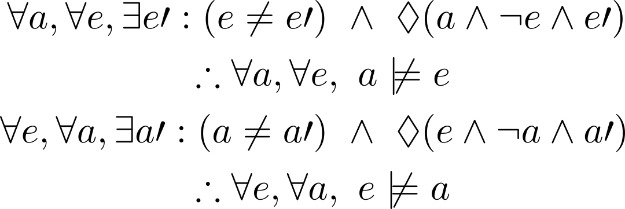
These claims fail because human actions and the ends (or purposes, goals, etc.) of those actions stand in a many-to-many relationship. The same action can be made to achieve an indefinite number of ends (I may buy an apple to eat it, resell it, gift it), and the same ends can be achieved using an indefinite number of actions (to eat an apple, I may buy one, steal one, grow one). Therefore, actions and ends cannot entail each other; any given action cannot be used to determine that one has any particular ends, and vice versa.[11]
We can apply this concept to argumentation: One may argue in good faith or bad faith; to resolve all conflict, some conflict, or no conflict; to win a debating competition; for one-upmanship; under duress; and so on. Therefore, Hoppe must be claiming one of two things: On one hand, he may be claiming that by making the physical action of argumentation we can be known to have particular ends, in which case he is straightforwardly wrong. On the other hand, Hoppe may be claiming that argumentation is defined as particular actions with particular ends, and that argumentation that does not hold to his assigned ends does not count as argumentation.
However, this would reduce the argument to a definitional tautology: “Argumentation which requires these ends requires these ends to count as argumentation.” This holds no meaning and has no bearing on reality. His definition would be nothing more than a definition, and as definitions are ultimately a subjective matter, this would necessarily be a subjective and analytic claim.
Importantly, argumentation as Hoppe defines it is also not the “unique method of justification.” During a performative debate or a bad-faith argument, one may still genuinely assert, argue for, and justify propositions. One may justify propositions he believes in, but one can also justify and make perfectly coherent arguments for propositions he does not believe in. Additionally, in a bad-faith argument or debate, one may also genuinely reach and express agreement on some or all disagreements, all without Hoppe’s assigned ends. Even if one does not explicitly intend to reach consensus on any given topic, he may still do so, because the intentions of an action do not determine the outcomes of an action. This is all to say that argumentation, as Hoppe defines it, is neither necessary for nor particularly relevant to either justification or consensus.
We can therefore say that AE’s definition of argumentation carries no special significance. Rather, the definition is a subjective label applied to a coincidence, and as it is a subjective claim, we are free to reject it as we please.
Hoppe (2016) implies the possibility of several potential objections to the arguments we have made thus far which we may clearly dismiss. Firstly, speech-act theory (mentioned in sec. 4) does not rescue the idea of inherent purposes, because the same objections apply to it. Illocutionary commitments (the intentions conventionally communicated by speech-acts, such as what one might take me to mean if I said, “I promise to return your bike”) exist only at the level of generalized social convention; they are not facts about any individual’s mental state. What one says cannot determine what commitments one actually holds, what he actually intends to do, nor how others will interpret his speech. A speaker may lie about his intentions, fail to understand what he is communicating, or knowingly risk being misunderstood; while other speakers may interpret any number of things from a statement they hear. Therefore, illocutionary commitments cannot logically determine any individual’s beliefs, intentions, or mental state in general, and nothing which cannot determine an individual’s mental state can determine an actual self-contradiction.
A defender may also object that one ought to hold Hoppe’s definitionally assigned purposes, and that argumentation has a regulative ideal that may not always be observed. We respond, firstly, that there could be a necessary self-contradiction in denying the NAP if and only if engaging in argumentation necessarily meant one had AE’s assigned purposes. If anyone could argue without Hoppe’s purposes, even if doing so is immoral, then that commitment is not necessary, and the NAP can be denied within argumentation without self-contradiction. Secondly, a regulative ideal is itself a norm, and any such ideal would need to be established independently of AE. However, AE provides no means of establishing norms except by its own procedure. Therefore, any attempt to establish such an ideal would be subject to the arguments made in this article against the attempted establishment of the NAP.
Returning to our argument, Hoppe assigns particular purposes to both descriptive and normative argumentation. He assigns two different purposes to normative argumentation: truth seeking (as a purpose of all argumentation; Hoppe 2016, sec. 1) and peacefully avoiding conflict over scarce means (sec. 5).
However, these ends are separable. One can pursue the truth of a norm without having any personal stake in a conflict; conversely, one can make sincere or bogus normative claims aimed solely at conflict avoidance without having any interest in whether they are true. Moreover, having the end of peaceful conflict avoidance does not determine that one will achieve it through normative argumentation: one could equally pursue it through purely practical appeals to the other party’s self-interest, which would involve no normative claims whatsoever. Just as actions do not imply ends, ends do not imply actions. Normative argumentation and conflict avoidance are entirely separable.
Moreover, because AE assigns two purposes to normative argumentation, the action has at least two definitionally required purposes: truth seeking and peaceful conflict avoidance over scarce means. However, if both purposes are necessary for a normative argument, no normative argument can ever be genuinely and solely motivated by the search for truth. One cannot be fully motivated by both ends at once: One’s judgment of the truth or the honesty of his claims would be compromised and biased toward confirming his alternative purpose. Treating both of these ends as necessary for normative argumentation therefore implies that a purely truth-seeking normative argument has never occurred, including any normative arguments a defender of AE may make.
A purely truth-seeking normative argument is not only possible, but also simply what we would ordinarily call “good-faith argumentation.” However, the only way a truth-seeking person could possibly be contradicting himself when denying the NAP is if he already believed that the NAP is true. Yet AE gives us no sufficient reason to accept that the NAP is true, nor any reason to accept that anyone presupposes that the NAP is true, except for a supposed performative contradiction against inherent purposes. That is, under a purely truth-seeking argument, AE’s argument from purposes would require its conclusion (that we presuppose the NAP) to justify its own premises. Therefore, even if a defender decides that bad-faith argumentation or a competitive debate does not count as argumentation, he does not avoid our critique. A defender must stipulate that both bad-faith and good-faith argumentation don’t count as argumentation. In reality, that would be pure stipulation. One can argue about norms without the end of conflict avoidance, and the supposed contradiction never needs to occur. AE’s argument from purposes fails as a presuppositional defense of the NAP.
Finally, a defender may find this section unconvincing and instead object that the physical motions involved in argumentation themselves are nonaggressive. Perhaps by arguing, one does demonstrate a preference for nonaggression in the moment of argumentation and therefore could not argue against it. However, demonstrated preferences themselves are not truth-apt and cannot be contradicted, strictly speaking. Rather, this argument must assume that one must believe that he morally ought to be doing whatever he is doing, otherwise he would not be doing it; this is called “the guise of the good.”
However, even if we grant the guise of the good, this argument cannot hold up as a defense of AE. Consider another physical motion of argumentation: One must be communicating with another person. It is just as impossible to argue during noncommunication as it is during aggression. By arguing, one would demonstrate the belief that he ought to communicate. But is this “ought” obligatory or permissive? And is it constant or temporary? If it is obligatory or constant, then everyone would be obligated to communicate for every waking moment of their lives, and anyone who denies this is contradicting the preconditions of argumentation and committing a performative contradiction—a patent absurdity. If, however, this “ought” is permissive or temporary—that is, if one is ever permitted to cease communicating—then nonaggression also is only permissible or temporary, and by extension, aggression is not forbidden. Every person is always either aggressing or not aggressing, communicating or not communicating, and thus there is no third option, and no principled way to claim that communication is permissible but nonaggression is mandatory.[12] Therefore, either this objection must collapse into absurdity, or it would fail to generate a contradiction in almost all cases, except for “we must always aggress” and “we ought never communicate.”
3. Communication Cannot Constrain Disputation
Here we make a refutation that applies to both interpretations (a) and (b). We do not assume either theory of truth. We demonstrate that Hoppe’s a priori of argumentation is self-defeating.
Hoppe ([1995] 2007, 18) believes that a proposition is true a priori if it cannot be denied/disputed without contradiction. This is how he makes transcendental arguments. AE claims that the NAP, the claim that argumentation presupposes the NAP, and the claim that interpersonal argumentation is the only way to justify propositions are all true a priori by this standard (Hoppe 2016, sec. 1, [1988] 2010, 154–55, 1988, 21). Hoppe ([1993] 2006, 345) has even summarized AE as consisting of these three claims alone. Therefore, if these claims can be denied without contradiction, then AE has not justified them as true a priori by Hoppe’s standard. Because AE does not provide any non–a priori justifications for these claims, then without undeniability, AE has no justification at all for any of these propositions.
However, AE only attempts to prove that these propositions are undeniable insofar as they are denied within communicated argumentation (Hoppe [1988] 2010, 156). Hoppe directly equates “dispute” with “communicate and argue” (Hoppe [1988] 2010, 154), and insists that every attempt to dispute something is a communicated argument (Hoppe 2016, sec. 1).[13] He also insists that his claims are true constantly and universally, and not just during or for any given argument (sec. 4). Therefore, if denial is possible outside of communication, then AE’s key claims can be denied without contradiction and are thus entirely unsubstantiated by AE.
However, noncommunicated denial is possible simply because we can think of words and propositions. If we could not think of words and propositions, then we could not say them, write them, or argue for them: Language itself would not exist. Therefore, it is impossible that AE is true and that we cannot think of propositions. However, thinking “The NAP is false” is denial, and it is denial outside of communication.
A defender may object to this because Hoppe (e.g., 2016, sec. 1) often claims, “All truth-claims . . . are raised, justified and decided upon in the course of an argumentation.” That is, strictly interpreted, perhaps we can think of propositions outside of communication, maybe we can even entertain them, but we cannot claim that a proposition is true without doing so in communication.
This is ultimately the only escape that AE could attempt. One may claim that a noncommunicated denial is not a justified denial, that it has no argument, or that it cannot be known to be true (e.g., see Apel [1972] 1980, 258). Yet none of this could matter or affect our argument, because denying a proposition is judging it to be false, not justifying that it is false; justification is irrelevant to denial. For AE to hold, it must be impossible to judge a proposition to be true or false outside of communication; noncommunicated denial must not exist.
However, such a world would be impossible, because in order to argue for a proposition in the first place, one must have already judged that it is true, or that it may be true. If one had not, he would not be arguing for his position at all. Yet this prior judgment must be made in private thought, not in communication. Therefore, if we could not judge the truth of propositions outside of communication, then argumentation would not exist, and AE itself would not exist as an argument.[14] Every time a defender of AE argues for it, he inherently demonstrates that noncommunicated propositional judgment exists, and therefore that every a priori claim of AE can be denied without contradiction by AE’s own standards. Therefore, the primary claims of AE have not been justified as a priori by AE’s own standards.
One may suggest that Hoppe (2016, sec. 4) has already addressed this objection by addressing the possibility of refusing to argue:
It has been held . . . that one can always refuse to engage in argumentation. . . . However, this is not an objection to the argument in question. Whenever a person refuses to engage in argumentation, he is also owed no argument in return. He simply doesn’t count as a rational person in regard to the question or problem at hand. He is treated as someone to be ignored in the matter. Indeed, someone always, on principle, refusing to argumentatively justify any of his beliefs or actions whatsoever against anyone, would no longer be considered and treated as a person at all.[15]
However, this quote does not address the objection we are raising. Even if we redefined “person” to refer only to those who intend to raise arguments, this would not rescue AE. For an a priori of argumentation to hold, propositional judgments that have not yet been communicated, even those that one intends to communicate, must not exist at all.
Hoppe (2016, sec. 4) also dismisses private thought as only producing “private truths” of no significance.[16] However, this is also irrelevant to our argument: Our point is not that private propositional judgment produces truth (maybe it doesn’t); all we need to demonstrate is that it exists. Its existence is all that is needed to show that AE’s claims can be denied without self-contradiction, and its existence is demonstrated every time anyone argues for AE.
Thus, in direct contradiction to AE’s claims, in order for argumentation to be at all intelligible as an action as Hoppe defines it, there can be no such thing as an “a priori of argumentation,” nor can there be any such thing as argumentative transcendentalism or communicative transcendentalism. None of the claims AE makes about argumentation—descriptive or normative—are or can be true a priori insofar as they are derived from argumentation itself. None of them are undeniable, because communicated disputation implies that other forms of denial exist. Therefore, AE has no basis for any premises or conclusions that it builds upon the a priori of argumentation, and the argument from argument is unjustified from its first premises.
Conclusion
Based on the above arguments, we therefore conclude that Hoppe’s AE, even in its most recent and clarified formulation, does not hold up as “true” under a consensus definition of truth. This is to say, per our second and third arguments, AE has failed to demonstrate that one cannot deny the NAP without self-contradiction, and it has failed to demonstrate that argumentation presupposes the NAP, and therefore it has failed to demonstrate that the NAP is uniquely justifiable.
More importantly for our purposes, Hoppe’s AE fails under a correspondence definition of truth. This is to say that Hoppe’s argument fails to demonstrate that property rights exist, and it fails to do so on all three grounds we have argued. Firstly, the very notion of using the transcendental method to establish a norm is untenable, and AE collapses on this front into either circularity or idealism. Secondly, the constitutive purposes assigned to argumentation are stipulative rather than necessary and hold no particular significance. Actions and ends are fundamentally independent, they do not imply each other, and unless “argumentation” is a purely subjective term, argumentation is not an exception to this. Thirdly, restricting the domain of meaningful disputation to communicated disputation is self-defeating: Communicated disputation necessarily entails the existence and usage of prior internal propositional judgments. Therefore, if argumentation, as Hoppe defines it, is intelligible as an action, then communicative transcendentalism itself is impossible. Argumentation, therefore, demonstrates that argumentation ethics is false.