Praxeological institutionalism is not a common topic in the Austrian School’s literature. The idea (Lachmann 1971, 57) was developed as a cross-interpretation of Misesian-Lachmannian economic theory and Thorstein Veblen’s ([1889] 1918) theory of institutional evolutionism applied to governance, institutions, and rules. Some Austrian authors developed this idea without explicitly distinguishing the praxeological nature of this particular stream of institutionalism—for example, Peter Boettke’s (1989) “process-oriented” institutionalism or Nicolai Foss and Giampaolo Garzarelli’s (2007) theory of “interpretative” institutionalism. Recently, Adem Levent (2025) explicitly restated and analyzed this link between Ludwig Lachmann and Veblen which bears the name of “praxeological institutionalism.”
This article does not propose reinventing the wheel. How, then, while remaining consistent with these prior approaches, could we successfully define “praxeological institutionalism”? Our proposal is the following (the definition is long): Praxeological institutionalism is best defined as a coordination framework in which institutions consist of built-in and retroactive processes of intercoordinated exchanges derived from individual human actions and stabilized through common contextual shared beliefs (CCSBs) under raw-materials scarcity, time, radical uncertainty, limited altruism (i.e., limited benevolence or limited cooperation with other people and limited generosity or limited material gifts to other people), and Humean fundamental conventions of justice (stability of possession, transference of property by consent, and obligation to fulfill promises). When linked with knowledge costs studied as transaction costs, praxeological institutionalism becomes a useful framework for understanding when, how, and why these costs are formed, expanded, and mitigated by human action; in turn, the limitation of such costs stresses a performative signal that helps to shape and stabilize CCSBs for a given pool of individuals.
Following this definition, praxeological institutionalism is primarily descriptive, as it does not specify which prior institutions perform better or best, or must be selected—either by a rational and deliberate procedure or by a market process of spontaneous evolution—by individuals through their actions. As a spontaneous coordination framework, it first and foremost rests on CCSBs among which certain salient focal points emerge (either progressively or suddenly, on a long-term or a short-term basis) as available tools to optimize transaction costs following the cumulative conditions of (a) being constructed and constrained by raw-materials scarcity, time, radical uncertainty, limited altruism, and Humean fundamental conventions of justice and (b) monetary calculation unavailability. (While the first cumulative condition is necessary, the second is not, as praxeological institutionalism is still viable in a context of monetary calculation availability—it just becomes a “background” condition rather than an immediate, direct causal mechanism in the individual decision-making process.) As such, it is a fundamental insight into Austrian eunomics—that is, the study of intercoordinated exchange processes—intertwining considerations about coordination (law), exchange (political economy), and power (politics) under the constraints cited above (Gauderie 2026a).
Indeed, in Austrian eunomics, transaction costs and opportunity costs are two faces of a single element: knowledge costs. To put it simply, a knowledge cost is here interpreted as a transaction cost—which is analyzed in three dimensions: triangulation, transfer, and trust (Boettke et al. 2023)—when an agent attaches an exchange capacity to an expectation preference in a context of para-, pre-, or unavailability of monetary calculation through the primary process of outsourcing the construction of interpretations to CCSBs (Gauderie 2026c). The aim is of course to economize knowledge costs in a context of monetary calculation unavailability:
In short, knowledge costs as transaction costs share at least these six common features: (a) hidden costs relating to the ceteris paribus operation of traditional economic reasoning (Mueller 2013); (b) costs of assigning exchange-capacity to expecting preferences; (c) costs incurred in making room for undertaking prospective economic calculation; (d) paramonetary costs aimed at saving knowledge costs in a context where monetary calculation is unavailable; (e) costs of outsourcing the construction of interpretation to common contextual shared beliefs; (f) costs associated with engaging in an action determined by a salient focal point (whether by convention or institutional governance), particularly in a context where economic calculation is impossible or unavailable. (Gauderie 2026c, 21)
In evolutionary adaptation, this particular trend of human beings outsourcing their interpretive process to CCSBs must have played an important role in the development of cognitive functions and societies, from which certain beliefs have been retained—salient focal points—as viable outputs to rely on as first steps in a context of monetary calculation unavailability or weakness. Institutions are therefore the embodiment of this outsourcing process as they emerge as knowledge-saving devices, providing focal points, especially in a context of monetary calculation unavailability when agents attach exchange capacity to expectation preferences. From an institutional point of view, transaction costs are the costs related to the creation, use, and manipulation of knowledge-saving devices by individuals.
While it is primarily a coordination framework explaining spontaneous types of coordination mechanisms, praxeological institutionalism is also a way to understand how and why designed institutions (i.e., governance models and rules of legislation) can then be properly articulated by human action based upon preexisting rules of justice. This latter kind of designed predication is called an “encoding” predication, in contrast to a spontaneous, “exemplifying” predication (Zalta 1983, 12; Klauk 2014). But while encoding predication is often motivated by risk-averse behavior to rationally counter the constraints of raw-materials scarcity, time, radical uncertainty, and limited benevolence and generosity, it can also jeopardize the exemplifying predication offered by certain institutions. Here, constitutional devices play a key role in facilitating individuals’ capacity to understand and distinguish between institutional modes of predication that are either encoding-oriented or exemplifying-oriented, and in explaining why these modes of predication are to be thought of not as rival properties, but rather as complementary ones. Consequently, considering these complementary encoding-exemplifying institutional modes of predication, praxeological institutionalism brings a precious insight into the production of legislation and, by its incorporation within a specific historical and philosophical background, into the development of a polycentric constitutional environment. This analysis sheds new light on the role of constitutional ethnography (Scheppele 2004).
The first section of the article is devoted to the explanatory power of praxeological institutionalism, linked to the emergence of salient focal points, to optimize agents’ coordination and the selection process of CCSBs, certain of which are refined as rules of justice. The second section explores the complementary paradigms of encoding-oriented and exemplifying-oriented institutions. The third section is dedicated to the encoding issues faced by a specific type of rules of legislation; namely, constitutional rules of legislation. Here, the fundamental task of legislation is to assess not only its compatibility with what has to be encoded (i.e., rules of justice and efficiency-coordination arrangements), but also how this encoding procedure is smoothed in such a way that it does not weaken—or even worse, suspend or paralyze—the selection process of CCSBs carried out by individuals in their daily life and by exemplifying-oriented alternative and functional institutions.
It Usually Starts (and Ends?) with Beliefs
According to Roger Koppl (2002, 8), the main Lachmannian problem lies in “the need for a theory of expectations in which each person’s actions are animated by the spontaneous activity of a free human mind” in an open-ended world characterized by a “kaleidic” order (Lachmann 1986) and fundamental knowledge disequilibrium and discrepancies: “The dynamic properties of Lachmann’s world depend in large part upon the dominance of a certain path-dependency effect. . . . In Lachmann’s analysis, the path dependency takes the form of changing knowledge rather than changing wealth. Expectations are necessarily divergent [and] discoordination . . . does not give way to coordination but only to some alternate pattern of discoordination” (Garrison 1987, 77–89). In such an environment, risks (and opportunities) are everywhere: Agents must learn to produce and exchange with the permanent constraint of raw-materials scarcity; they lack time to engage in their activity and must choose among several alternatives; they can never be sure if their actions will be successful or not, or if the knowledge they act on is fully reliable or updated; and they have little tolerance for an extended and undiscerning benevolence toward every agent potentially engaged in an intercoordinated exchange with them. Their actions thus require permanent and rapid adaptation of the agents’ abilities to restructure their knowledge capital, skills, and plans. But while raw materials are scarce, certain types of persistent or unclear signals are definitely not—in fact, when agents must make a decision, there is always a tragic abundance of these types of signals. They are everywhere. Some of these signals add confusion to the mind of an agent: They might be useful, but not at this moment, or not in this precise context, or not for this agent, or not for this exchange; and they are probably quickly perceived as noise and thus not even taken into account in the agent’s mind. But some of these abundant signals are candidates for enlightenment of the agent in view of her action, and whether they are will be a matter of ex post appreciation. These types of signals are called “focal points,” and some of them appear to be better candidates than others. These “best candidate” focal points are called “salient focal points.”
The following is a simple spatial example to demonstrate the power of salient focal points. If you have just arrived in the center of Paris, you cannot contact the person you must meet, and you do not know that person very well because she is not your friend or relative (you do not know her address or have a special, personal bond whatsoever with this person—except you know that this person is American), what do you do? First, you have to recognize that location signals for this kind of decision are everywhere: The baby crying at the corner of the street, the dog barking at strangers, the bakery across the street with big lights, the tall oak tree on which you lean, the crowded parking slot on your left, the entrance of the graveyard that you can glimpse, the food truck behind you—each of these items is a signal, but you will probably acknowledge that they are not suitable, given the conditions outlined above, to enable the other person to find you (i.e., in this context, these specific signals would not be optimal for efficient coordination). So, you go to the fifty-sixth floor of the Montparnasse Tower Observation Deck, and you again notice a lot of signals: a huge church whose name you forget, Montmartre, the Eiffel Tower, indistinct trees, birds, clouds, cars, tall gray buildings, and the Louvre. Rationally, you will probably select Montmartre, the Eiffel Tower, or the Louvre. Why? Because they are tall and famous monuments—probably known by every American. But after a moment of thought, you are not entirely sure about that. So you decide to select the Eiffel Tower (at the end of the day, you have to make one choice equivalent to one place).
“Of course,” you might say, but this choice is not obvious for all situations. If the person you had to meet were a member of a lost Caribbean tribe that had had no contact with the modern world or Western civilization, would you choose the Eiffel Tower so quickly? It is true that you would probably choose the Eiffel Tower ultimately, but you would not be so quick to decide: Here, the cultural context is different, and thus interpretation must take into account the fact that while the Eiffel Tower is known to nearly every person on Earth, it may not be known to this person. If you knew more about the culture of this person—for instance, that this lost tribe used to build arcade-shaped structures to pray to their gods—you might think that, on the hypothesis that this person saw a picture of the Arc de Triomphe at the airport, she would have done everything to get there to ask for the blessing of her gods in such a strange and remote land.
What is essential to bear in mind is that among available, abundant signals, you chose to select some of them—Montmartre, the Eiffel Tower, and the Louvre—which therefore became focal points. And among these three isolated focal points, you opted for the one that would, to your knowledge, perform best under conditions of time and uncertainty. Thus, the Eiffel Tower became your salient focal point. You eventually go there and find the person who recognizes your face: Your coordination choice was efficient enough to perform a successful action and achieve your goal.
The story is not just a funny tale for children. It is more or less the line of reasoning put forward by the winner of the 2005 Nobel memorial prize in economics, Thomas Schelling (1960). Most of the answers to his question “Where would you meet someone in New York if you cannot communicate?” were “Noon at the information booth at Grand Central Terminal” (Schelling 1960, 55). This is why we call these types of focal points Schelling points, and they connect brilliantly with the notion of tacit coordination—human action, but not human design—famously pointed out by another Nobel winner, this one from 1974, Friedrich Hayek. Here, the agent is not seen as a purely passive receptor of these signals, focal points, and eventually salient focal points (or Schelling points). In the context of the ideas and concepts involved in the decision-making process, it is precisely by engaging with the environment (or, to be more precise, by manifesting herself as a transformative component of this environment) that the agent ultimately transforms these signals from a doxastic, abundant configuration into a more integrated, narrower arrangement—or, to use philosophical terminology, a translation from a “Zeitgeist” to an “Umwelt.” Hence, manifesting oneself as a transformative component of one’s environment is encapsulated as “acting,” and the result of an environmental transformation is therefore called “an action.” “Creativity” as such is inherent to any type of human action.
In a context where monetary calculation is either unavailable or severely underperforming, such as in a constitutional public monopoly of the production of legislation, the individual’s ability to configure her mind in such a manner that some signals’ abstractable properties are eventually refined into focal points that might (or might not) become salient (i.e., become a touchstone for decision-making) is decisive. But it has an enormous cost in terms of knowledge.
First, it mobilizes the agent’s energy to such an extent that he often has to stop whatever he is doing to focus on this issue—he is then caught in the following paradox: By identifying pertinent signals (i.e., focal points) and deriving a constructed interpretation that will effectively be crystallized into one refined version of a focal point (i.e., a salient focal point), he is suspending his alertness, discovery, and creativity from other parallel activities that might require immediate action. In other words, the world continues to run while the agent is temporarily stuck in his salience process. In our example, what if the person the agent was looking for passed by him while he was deciding to head toward the observation deck? He would certainly have preferred not to waste his time, energy, and money going to the fifty-sixth floor of the observation deck, taking a taxi, and riding to the Eiffel Tower. Simply transpose this example onto a conceptual mapping framework, and you face an equivalent situation. If an agent with no particular interest in violating a rule of legislation (except that it would benefit him in the short term) faces a situation where he has the choice between action A and action B, where action A corresponds to a prohibited action and action B corresponds to a legal action, then the agent will probably choose action B over action A if no other profit opportunities point to the violation of the legislation as a better opportunity than its nonviolation. In the realm of spatial orientation, there is, to speak like an economist, eventually a trade-off between one’s ability to deeply (and preferably quickly) focus on one topic and one’s ability to attend to the flowing streams of knowledge that never stop and wait for the agent to “wake up” to them. And in the realm of legislation, there is a trade-off between the opportunity cost of violating the law and the potential gains and losses of not doing so, all weighed by the agent.
Second, due to the complexity of a particular phenomenon, the individual salience process is often felt as an unreliable mechanism (i.e., inefficient for coordination) unless it is accompanied by other complementary coordination mechanisms. The market process is one such complex phenomenon. In our example, common culture—that is, the stereotype that Paris’s most renowned monument is the Eiffel Tower, or that London’s most renowned monument is Big Ben—was enough to refine a focal point into a salient one. But while interpretive, cultural pieces of knowledge appear vital for engaging in entrepreneurial creativity (Lavoie [1991] 2015), the market process is best comprehended by agents when directly coordinated by the free-market price system, which acts as an imperfect but trustworthy, decentralized coordination system under the conditions of the division of labor and knowledge (Lavoie [1985] 2016) to perform a proper monetary calculation (Mises [1920] 1990). Of course, this means that these monetary prices are always interpreted against a permanent background of focal points (i.e., indirectly).
What all of these solutions—whether a stereotype, a rule of legislation, or a price—have in common is that they are pieces of knowledge-saving devices that provide ready-made expectations on what ought to be done in a general situation. Hence, “Choose the Eiffel Tower” for the stereotype; “Choose action B” for the rule of legislation; “Choose the less expensive product” for the price. Except in specific, atypical situations where, for instance, the least-known monument has to be chosen (e.g., a hide-and-seek game; the rule that violates the legislation over the conforming one; or a Veblen good where the buyer is willing to pay a high, if not the highest, price for a luxury good), these pieces are part of broader knowledge-saving devices—that is, an educational and cultural setting for stereotypes, a governance framework for the rules of legislation, and the price system for prices. Cultural education, governance frameworks, and price systems all bear a common name: “institutions”: “Institutions do not exist to design outcomes. They exist to structure interactions. They are not engines of allocation. They are grammars of coordination. They do not produce prosperity. They make prosperity intelligible and possible” (Ferlito 2026, 23). Indeed, to economize knowledge costs—and the cost of this saving mechanism is called a “transaction cost”—some patterns have emerged as a network of salient focal points to structure interactions between individuals.
What leads an individual to move from first recognizing the abundance of signals, to selecting the relevant ones as focal points, and then to refining one of those focal points into a single salient focal point? The answer is that salience emerges through a selection process of CCSBs. The CCSB selection process is an inherent part of interpretive acts and virtually never ceases to produce retroactive effects, as agents engaged in intercoordinated exchanges continue to perform interpretive acts. Here, a brief restatement of knowledge cost as transaction cost linked to constitutional issues is essential. In line with Boettke et al. (2023),
A knowledge cost is interpreted as a transaction cost when an agent attaches exchange-capacity to an expecting preference, e.g., for a politician, to turn a programmatic measure of his political manifesto into a feasible positive rule once elected. As such, transaction costs constitute the ex ante costs of structuring a transaction under a given positive item, whether an existing action, rule, or institution. It requires a prior interpretation of the positive environment in terms of common beliefs, focal points, and conventions, and therefore antecedent resources to establish, protect, and transfer property titles on the subsequent exchanged resources. Transaction costs analysis is deepened by a fine-grained study in three dimensions (Boettke et al. 2023): triangulation, transfer, and trust. In a constitutional framework, triangulation refers to a coordination problem between the producers of the rule of constitutional legislation, their justiciable competitors, and the justiciable who are not competing for the constitutional means of the production of power. Transfer refers to the consent-regulated allocation of an exchange-capacity to expecting preferences. Trust refers to the ability of the agent to ground her action in a minimal predictability spectrum regulated by the body of actual constitutional rules of legislation. Therefore, transaction costs are para- (or pre-) monetary costs aimed at saving knowledge costs in a context of monetary calculation unavailability through the outsourcing of the construction of interpretations to common contextual shared beliefs. It is then easy to understand the role of these common contextual shared beliefs when an agent cannot immediately (or never) establish an explicit monetary price as they act as ready-made substitutes for money which “is that specific good that embodies both of these monetary roles—as both the pricing unit and exchange medium” (Howden and Bagus 2023, p. 177–178). These common contextual shared beliefs of agents act as the backbone and the fuel of knowledge costs as transaction costs. (Gauderie 2026c, 21)
Here, salient focal points constitute phenomenological magnets for CCSBs as institutional nodes. In fact, as network embodiments of an individual process of “outsourcing of the construction of interpretations” to CCSBs—whose segments are ideally selected as quickest paths to other nodes and the optimization of an efficiency-coordination scheme—institutions constitute a structured form of CCSB patterns that have been regularly (or mainly) stressed by individuals as salient focal points. For the student of institutions, the difficulty lies in the fact that sketching a representation of institutions that is fully consistent with a networked, often multilayered, knowledge-saving device form is unrealistic. Modeled on the Lachmannian theory of capital (Lachmann 1978; Ferlito 2016), this approach to institutions considers that CCSBs crystallized in salient focal point nodes constitute heterogeneous and intertemporal elements whose mutual compatibility is structurally—and sometimes critically, to such an extent that the agent dismisses the institutional power of such a network of salient focal points—assessed by an individual when facing a unique situation. To paraphrase, with small adjustments, Carmelo Ferlito’s (2018, 36) understanding of capital, institutions are thus “a set of productive combinations of [CCSBs], i.e., salient focal points, consciously [and unconsciously] implemented because they are thought to be the logical [and rational] outcome of plans set in motion by the intention of fulfilling expectations.” As such, one can admit that an institution serves, more or less, as common cognitive capital for individuals engaging in intercoordination and exchange.
However, that they are institutions does not mean that networks of CCSB–salient focal point nodes are immune to maladjustments. Just like any product of human action, they are fallible and prone to different effects that may erode their primary function as efficiency-coordination combinations of CCSBs, causing them to degenerate from knowledge cost–saving devices enforcing cooperation in the long run into an echo chamber of an extended, global discoordination scheme often reinforced by power mechanisms and a shared fallacy: considering that because an institution has lasted for centuries or even millennia, this must signify that it is a net positive contribution to good order and workable arrangements (Fuller 1954)—whether evaluated by the prospect of justice compliance or of efficiency coordination. In other words, it is not because CCSBs are organized as salient focal points, themselves structured within institutions, that they are accurate vehicles for facilitating the outsourcing of interpretation construction and thus mitigating transaction costs from an individual’s knowledge-cost point of view. And it is not because they are long-lasting institutions that they are sustainable with regard to this very process. Some institutions may even degenerate to the point of ignoring justice compliance and becoming predatory toward other institutions, particularly when they overlook the complementary dichotomy between encoding-oriented and exemplifying-oriented modes of institutional predication.
Encoding-Oriented and Exemplifying-Oriented Institutions
To better understand this complementary dichotomy and institutional predatory behavior, one need not seek far. Direct examples in everyday life illustrate the case.
Take an informal contract between two individuals—for example, when Joe goes to James’s grocery and buys an apple. No need to worry about a written contract in that case. It is not the same if the stakes are much higher—for example, when Joe goes to Jack’s real estate agency and wants to buy an apartment. Here, the two individuals will probably agree to a written contract, even in a jurisdiction that does not require, by a specific rule of legislation, a written agreement to proceed with this transaction. A contract, in its “natural” form, is an exemplifying-oriented institution for exchanges. But sometimes both parties consider that given the stakes, Verba volant, scripta manent (Spoken words fly away, written ones remain) is indeed a great warning; and then, upon this specific CCSB, they will reach a common prior agreement, sometimes with another contract (e.g., a right to preemption agreement) to endow the final contract with an “artificial” form—that is, as an encoding-oriented institution. The parties agreed to do so precisely because they think they will mutually benefit from this encoding mode of institutional predication, which is favored by risk-averse parties. In contrast to a contract, a default rule of legislation in its “natural” form is an encoding-oriented institution for intercoordination. But sometimes, the legislator may decide to incorporate in the legislation apparatus altering rules of legislation—that is, “rules that establish the necessary and sufficient conditions for displacing a default” (Ayres 2012, 2032). Therefore, the primary effect of altering the rules of legislation is to bypass, under certain conditions (which might be mandatory), the default rule of legislation. Here, it is easy to consider that, for instance, the legislator credits a specific CCSB (i.e., Specialia generalibus derogant [Specific provisions override general ones]) with enough functional power to bend the form of the relevant initial default rule of legislation. Shifting from an encoding-oriented institution, it will then tend to be interpreted as an exemplifying-oriented institution—specifically because it (temporarily) benefits from a derogatory regime among other rules of legislation—by agents who are not (or are less) averse to risk.
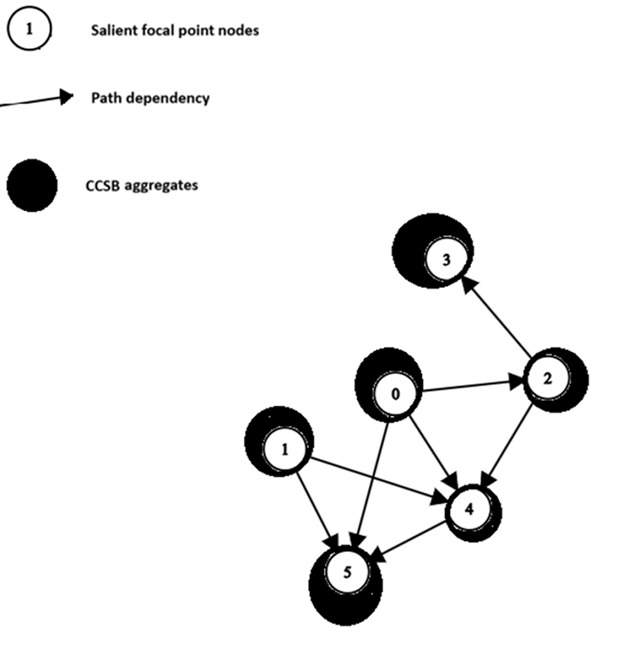
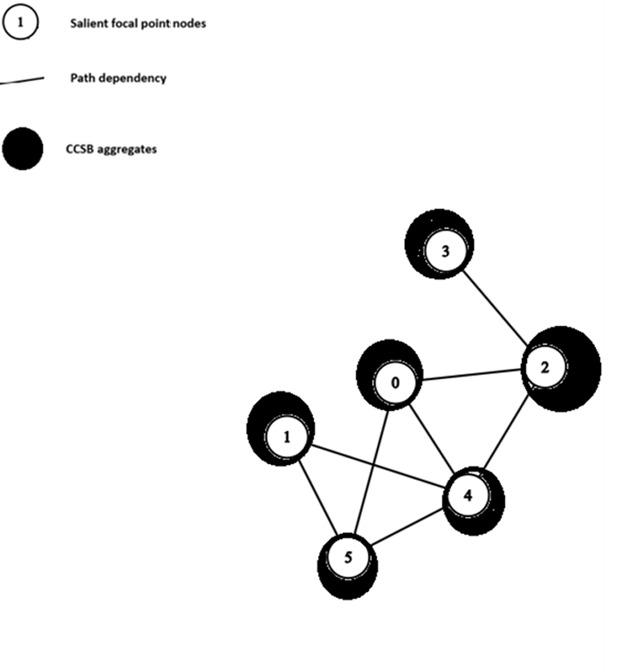
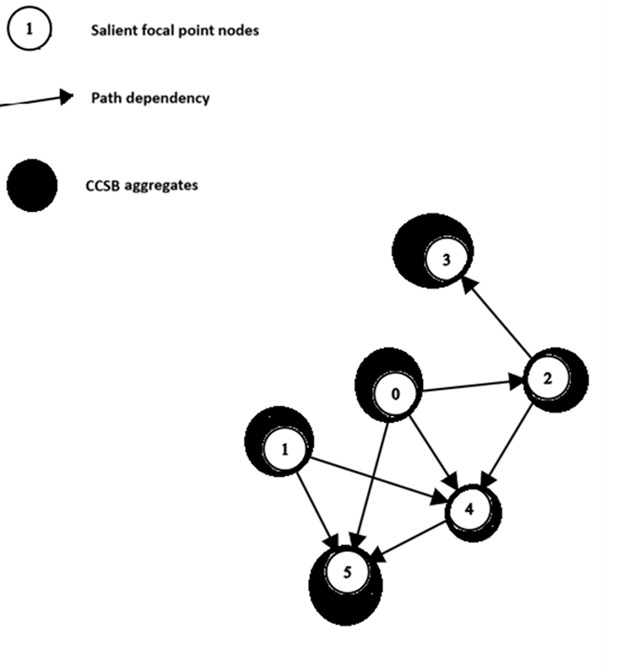
To be precise, there are numerous types of encoding-oriented and exemplifying-oriented institutions. For the layman, a rule of legislation is perhaps the most evident example of the first type of institutional setting, but family is another kind of encoding-oriented institution, as are, for instance, in-house corporate relationships. Other apparently more subtle techniques, such as hierophany—that is, the process by which a sacred object manifests itself in the profane world (Eliade 1965)—are also found not only in ancient books and testimonies, but also in a priori secular contexts (e.g., when one enters the library and automatically stops chatting loudly with her friend). What these types of encoding-oriented institutions have in common is that they are structured on (more or less rigid) hierarchies. There is an order that comes from the top that requires obedience—or at least the individual feels as if this were the case, even if she does not know why or does not bother to find out why. Although, as stated above, it is impossible to map the full structure of an institution’s components (and their properties) because it is in a state of permanent recombination of its CCSBs in salient focal points embodied by connected nodes, one can render encoding-oriented institutions in the form of a directed graph (figure 1) and exemplifying-oriented institutions in the form of an undirected graph (figure 2).
Attempts to exemplify certain segments of an encoding-oriented institution (e.g., refraining from applying the immediate retaliation part and exclusively favoring the unconditional forgiveness part of the tit-for-tat strategy) might significantly weaken the chances of success of the cooperation relationship (Axelrod 1984). Introducing a presumption of equal liberty in the use of the relevant institution can create discoordination in some contexts—for instance, it may blur responsibilities by weakening ownership functions (Salin 2000) in the context of property rights regulation. Here, agents probably do not envision cooperation in the long run as a plausible or desirable outcome of their present actions: The result is that considering long-term investments is not worth it because one has no (or a not clear enough) enforceable right to (expected) future capital. This discoordination effect due to poorly defined property rights by socialist types of governance, especially in the study of ex-Yugoslavia, is sometimes known as the Furubotn–Pejovich horizon problem (Furubotn and Pejovich 1970; Pejovich 2001).
But while encoding-oriented institutions are often the result of human design, most of the institutional relationships agents engage in (habits, language, money, and so forth) primarily follow the structure of exemplifying-oriented institutions. Here, there is no order that comes from the top that requires obedience; on the contrary, there is a diffuse knowledge that emerges from individual interactions of agents benefiting from a law of equal liberty presumption with respect to the relevant institution—or at least, again, the individual feels it as if this were the case.
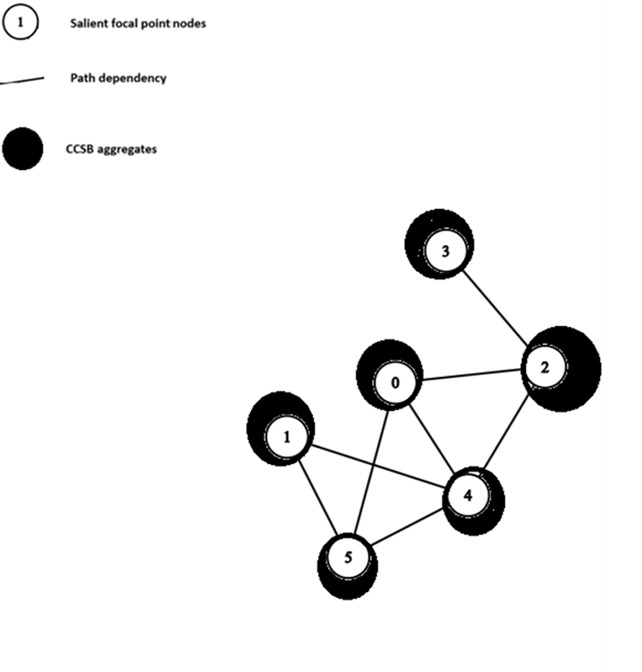
Attempts to encode certain segments of this type of exemplifying-oriented institution (e.g., grammar rules to respect proper ways of writing a certain language and courtesy rules to respect proper ways of addressing certain people) are always attempts to introduce a hierarchical mindset where there was primarily a law of equal liberty presumption in the use of this specific institution. Such attempts are made in order to foster, defend, and stabilize definite sets of CCSBs within the vernacular function of the institution. One instance, spanning from the consolidation of the monarchy as soon as the beginning of the thirteenth century with Philip Augustus to the French Third Republic (1870–1940), was the use of language to foster, defend, and stabilize a proper way to write French modeled on the langue d’oïl from the Parisian king’s court, as compared to the langue d’oc spoken by rival lords and powerful, rich families from Provence. Money emitted by a monopoly institution (i.e., a central bank) with the power, according to a set of rules of legislation, to unilaterally impose an interest rate acting as an intertemporal price is one example among many other attempts to crush “social power” and to replace it by “political power,” to use Albert Jay Nock’s terminology; or, to use a less controversial statement, to drift away from the comprehension of Carl Menger’s ([1883] 1985, 289) “organic institutions” in the humane sciences: “The solution of the most important problems of the theoretical social sciences in general and of theoretical economics in particular is thus closely connected with the question of theoretically understanding the origin and change of ‘organically’ created social structures.”
Note, however, that the Furubotn–Pejovich horizon problem, in terms of justice compliance, is a result of the violation of at least one of the Humean conventions of justice (i.e., stable possession); and that this exemplification of an encoding-oriented institution (i.e., property rights) is precisely conducted with the means of political power and its rules of legislation—that is, encoding-oriented institutions’ power. This paradox is not rare in contemporary institutional governance. It can be called “institutional predatory behavior.” From ordoliberalism—“What separates us from the economic liberalism of the 19th century is that we have learned to distinguish between laissez-faire and competition, that we very definitely want to shape an ‘Ordnung’ and that we think in terms of economic constitutions” (Miksch 1947, 20)—to antitrust policy openly designed to favor competition by allegedly breaking monopolies (Armentano 1996), these attempts to push an exemplification mechanism toward encoding-oriented institutions by way of encoding-oriented institutions derive either from a genuine misunderstanding of the inherent differences between voluntary cooperation and coerced cooperation or from designed institutional predatory behavior of agents acting in, for, and on behalf of encoding-oriented institutions toward exemplifying-oriented institutions. In fact, one cannot design a “human action” and expect it to work as a spontaneous phenomenon, for limited initial variables and constraints eventually bound the spectrum and the trajectory of such experiments. This conditioning is, of course, due to agents’ limited rationality and radical uncertainty (Hayek 1990), but there is more to it than that. Interactions at the individual and institutional levels (i.e., the intersection effects of multilayered, structured institutions) are not only technically unpredictable but also simply do not exist as compatible elements insofar as a particular social phenomenon requires an individual or institutional coordination solution. Whether it is a total power monopoly (i.e., a will to completely encode human action—“The reason why the ingenious devices of totalitarian rule, with their absolute and unsurpassed concentration of power in the hands of a single man, were never tried out before, is that no ordinary tyrant was ever mad enough to discard all limited and local interests—economic, national, human, military—in favor of a purely fictitious reality in some indefinite, distant future” [Arendt 1979, 412]) or limited monopolies (i.e., to encode certain institutions or institutional segments), the very nature of institutional predatory behavior is to overlook that “life develops. Evolution happens. Environments change. Positive response—even if we define that simply as survival—requires people who can think independently and creatively interact with the challenges presented to them” (Parrish and Beaubien 2024, 145). Institutional predatory behavior is therefore also limited by the kind of horizon problem that affected the Yugoslavian institutions studied by Eirik Furubotn and Svetozar Pejovich.
What defines a successful institution? An institution is successful if it is integrated into most agents’ aptic structures over the long term. Aptic structures, as defined by Julian Jaynes ([1976] 2000, 31n8), are “the neurological basis of aptitudes that are composed of an innate evolved aptic paradigm plus the results of experience in development. . . . They are organizations of the brain, always partially innate, that make the organism apt to behave in a certain way under certain conditions.” In other words, a successful institution becomes a set of interpretive root concepts for agents who feel that this set was naturally developed within their own evolution and given as a spontaneous hermeneutical map to read the signals’ territory.
Think, for instance, about the Whig interpretation of history as an institutional framework (Butterfield 1931; Wilson and Ashplant 1988) encompassing salient focal points such as the notion of social justice (Hayek [1976] 1982), contra which alternative institutions are proposed—for example, Rothbard ([1979] 2011). Is the Whig conception of history in Western liberal democracy an encoding-oriented institution? Clearly not per se, as no one ever ordered an agent to make effective use of this institution in her own personal interpretations of social phenomena and threatened to molest her if she did not—that is, if she did not think the low transaction costs associated with the choice of this knowledge-saving device were worth the surrender of her own interpretation (constructed using individual and other institutional means). But at the same time, is it totally an exemplifying-oriented institution? In fact, a simple inquiry into how the Whig conception of history is disseminated will reveal that encoding-oriented institutions are everywhere, from universities to peer-reviewed journals, think tanks, the press, and the state’s apparatus. Of course, none of these institutions is ever totally composed of encoding-oriented segments. But overall, the conduct of these institutions favors an encoding view of intercoordination rather than an exemplifying one. That is why even proponents of alternative institutions, such as the libertarian historical revisionism endorsed by Murray Rothbard, needed encoding-oriented institutions—for example, the Center for Libertarian Studies, the Cato Institute, the Mises Institute, and the Libertarian Party—to support their institutional proposals. What is true for libertarians also holds for other proponents of alternative institutions, such as Antonio Gramsci’s Marxist hermeneutics or socialist populism in general (Laclau and Mouffe [1985] 2001):
There is therefore a need to reclaim Gramsci’s work for the Left, recognizing that the fall of Soviet communism did not mean the death of Marxism. . . . Marxism, which has the advantage of being a solid philosophical system, resisted the wave as best it could by retreating into the academic sphere where it had reigned supreme since the postwar period. However, it no longer had the resonance it once had, as the media landscape was dominated primarily by the antitotalitarian and anticommunist discourse of the new philosophers and, secondarily, by the praise of the intellectual spécifique, i.e., not linked to representative partisan organizations and focusing their commitment on denouncing injustices done to minorities [which], according to Michel Foucault’s logic, would prove—the conditional is necessary here—more effective than the classic struggle in the social arena typical of the French left. (Frétigné 2021, 19–20; translation mine)
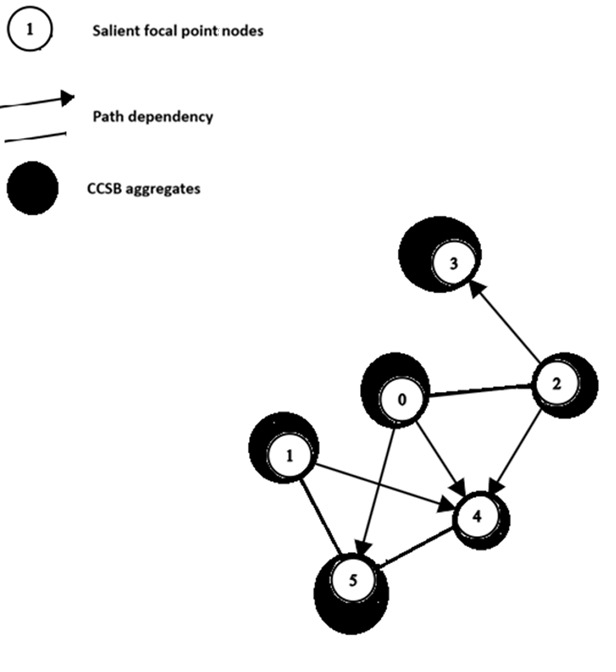
In fact, most institutions are not composed entirely of either exemplifying-oriented or encoding-oriented segments. The market process needs an outline definition of concrete, soundly defined, encoded property rights to function properly; and legislation rules–based governance models need decentralized, exemplified cellular structures to manage emerging grassroots phenomena (Foldvary 2002). All these institutions would need to rationalize their functioning in order to offer a binary answer to the following question: Is this mixed orientation mainly the result of an institutional predatory behavior or of the selection process of CCSBs? As shown in figure 3, [0–2], [1–5], and [4–5] consist of undirected paths, or exemplifying-oriented segments, while the others are directed paths, or encoding-oriented segments.
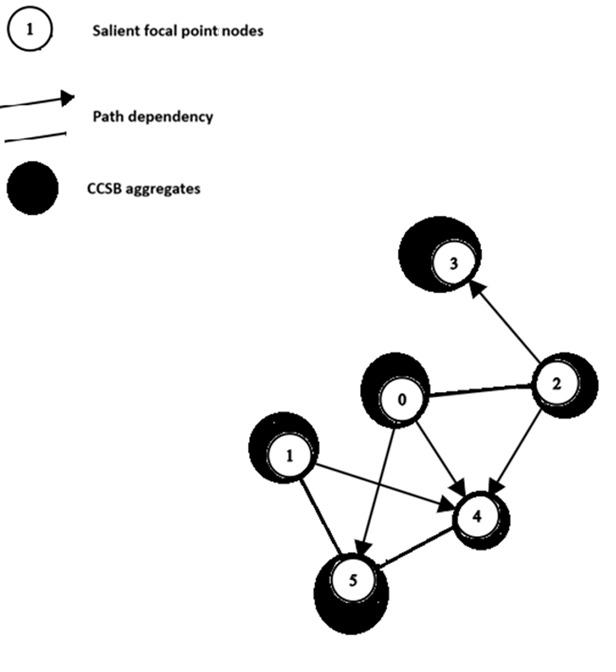
Three considerations must be stressed here. Firstly, in our contemporary (and maybe Western) mindset, the “positive” transformation of aptic structures is primarily recognized as a successful outcome of the integration of exemplifying-oriented institutions. Yet such transformations may also take the form of enduring relations of authority and obedience rather than processes of moral or institutional improvement. For example, Jaynes ([1976] 2000, 74) aptly shows that the association of the king’s person and role with a godlike figure lasted for his subjects, who felt obliged to obey him, even long after the king’s death. The same used to happen in ancient Greece, where literal voices were heard on battlefields demanding that agents act in this way or that and in general when important decisions had to be made by agents (Jaynes [1976] 2000, 72). These aptic institutions are precisely the products of the successful integration of encoding-oriented institutions into agents’ minds. But it must be stressed that, in these societies, the individuation process of agents was poorly (or not at all) advanced compared to our contemporary standards; at least, it was not functioning on the same schemes of reasoning that our models presuppose (Vernant 1989). To phrase it differently, our selection process of CCSBs led us to an individuation type of representation that reinforced the liberal idea that aptic institutions are best achieved when they are the result of exemplifying-oriented institutions (i.e., resting on free and voluntary cooperation). Secondly, the simple fact that an institution has been successfully encapsulated in aptic structures (i.e., has become an aptic institution) does not guarantee at all that incentives and expectation preferences toward good order and workable arrangements form part of this implicate order. Consequently, successful institutions do not equate, per se, to justice compliance or efficiency coordination. An institution can perfectly violate fundamental rules of justice or, in dramatic and numerous ways, diminish the potential improvement in overall efficiency coordination of human arrangements and still be acting, and even reinforced, in its gained aptic dimension. Thirdly, the aptic dimension of an institution, or its convergence toward integration within agents’ aptic structures, fundamentally rests on its capacity to optimize its path dependencies linking salient focal points. This is achieved by technology. From an institutional point of view, technology is therefore the art (a) of discriminating between quick path dependencies and slow path dependencies, eliminating the latter without affecting the functional arrangements of former; (b) of accelerating the quick path dependencies without destructuring the transitional activity of CCSBs between the nodes of salient focal points (i.e., compression without loss of useful data); and (c) of improving overall efficiency coordination of institutions as ready-made knowledge-saving devices, minimizing the transaction costs.
In light of these considerations, a better understanding of the institutional function of constitutional rules of legislation and constitutional governance models is outlined in the next section. Under a praxeological institutionalist analysis, constitutional devices serve as individual-centered, rule-based custodians against the conditions of emergence, and the potential negative effects, of a “fatal conceit” in aptic institutional integration, resulting in net losses for the individuals’ and the institutions’ paths toward good order and workable arrangements—that is, against the violation of justice compliance, the diminishing of overall efficiency coordination, and cognitive maladjustments. The whole difficulty here is to depart from a theorization of constitutional devices within the institutional predatory behavior model and to conceive a new constitutional model that will not fall into the trap of encoding exemplifying-oriented institutions and constitutional regulatory capture in order to safeguard the retroactive feedback between the four basic conditions of the three Humean conventions of justice on one hand, and individual and institutional CCSB selection processes on the other.
The Normative, Praxeological Functions of Constitutional Devices
At this point in the article, the reader might suppose that the work here consists of an introduction to a new kind of nudge theory. But it does not: first, because praxeological institutionalism, in a Lachmannian representation, fundamentally rests on a complex form of methodological individualism (Gloria 2019), which precludes any utilitarian aggregate calculus based on interpersonal comparisons; and second, because it dismisses the instrumental view of institutions. Indeed, although they do not, of course, act on their own, institutions integrate patterns that favor individuals’ selection of specific classes of actions. Agents willing to participate in an institution by interacting with it both constrain and construct their view upon these classes of actions. This instrumental view of institutions is one of the main contentions Anthony de Jasay ([1985] 1998) makes against the public choice methodological framework applied to constitutional political economy.
In order to tackle institutional problems on a noninstrumental and nonutilitarian basis respecting complex methodological individualism, we propose to enrich praxeological institutionalism applied to constitutional political economy with the following core notions: an a priori decision rule encompassing a justice review and an efficiency-coordination ranking procedure; hypotheses of team reasoning grounded in an entrenched common belief rationality; and a prevention of regulatory captures and deterrence of institutional predatory behaviors through incorporating a governance framework based on a polycentric constitutional order aiming to foster Humean constitutionalism (i.e., constitutional safeguards of the CCSB selection process which lies at the heart of the conditions of Humean conventions).
A Priori Decision Rule
The first praxeological function of constitutional devices should be to enforce the a priori decision rule (DR) as a lexicographic procedure. Because the DR is defined in detail in Gauderie (2026c), this article does not further deepen this topic. Suffice it to stress that the DR articulates the first methodological layer of Austrian eunomics as a lexicographic decision procedure that filters and ranks actions, rules, and institutions by reference to commutative justice before any governance or efficiency-coordination comparison is even admissible. It sharply distinguishes justice compliance (or lawfulness) from legislation compliance (or legality) and therefore subordinates efficiency coordination to a prior, natural law–based review of justice compliance. In this framework, an a priori test functions as a constraint—that is, only those alternatives that respect valid titles, nonaggression, no fraud, and a thin, procedural form of the rule of justice (generality, prospectivity, clarity, and congruence in application) are allowed to enter the comparison set. In contrast, all unlawful (or non-justice-compliant) options are excluded regardless of their potential efficiency-coordination or power-enhancing (in a governance context) consequences. Justice thus operates both as a principle of reciprocity (“Act so that your neighbor can exercise the same freedom as you with respect to his own”) and as a categorical screening criterion, so that governance analysis never starts from all feasible policies, but from the narrower domain of workable arrangements of actions, rules, and institutions that can be defended rationally as respecting Humean fundamental conventions of justice (i.e., stability of possession, transference of property by consent, and obligation to fulfill promises) under the natural constraints of time, radical uncertainty, raw-materials scarcity, and limited altruism. Once the justice review has eliminated illegitimate options, efficiency-coordination ranking intervenes as a secondary selection layer that asks which among the justice-compliant alternatives best foster stability, predictability, error correction, entrepreneurial creativity, and the discovery and exploitation of catallactic advantages in an open-ended market process of intercoordination and exchange. The DR therefore yields a two-tiered ranking. First, a discontinuous boundary between justice-compliant (or lawful) and merely legislation-compliant (or legal) options, and second, a graded ordering of justice-compliant options according to their capacity to coordinate dispersed knowledge and align individual plans over time. As Jesús Huerta de Soto (2009, 22) stresses, in the long run and under proper institutional conditions, genuine justice compliance and genuine efficiency coordination are complementary rather than competing standards, since what is justice-compliant cannot be sustainably inefficient and what is durably efficiently coordinated cannot systematically violate the Humean conventions and the procedural form of justice. This is the central Austrian eunomic claim.
Entrenched Common Belief Rationality and Team Reasoning
Team reasoning based on entrenched common belief rationality is a substitute framework for the classical hypothesis of common knowledge of rationality (Sugden 1991). This substitution is the second epistemological shift concerning constitutional functions that is promoted by praxeological institutionalism. Here again, much of the framework is defined in Gauderie (2026c, 18–19). Entrenched common belief rationality’s first and fundamental claim is the following: Common beliefs (CCSBs) are entrenched. This means that CCSBs are maintained as long as they are not contradicted by an element that the players know to be true—or at least as long as the agents acknowledge them as if they were true. Some of these CCSBs, as specified above, become salient focal points (i.e., stabilized aggregates of CCSBs) directly incorporated into a network of ready-made knowledge-saving devices (or institutions). Team reasoning is just the ability for agents, under certain circumstances, to act as if they were acting on behalf of the team—that is, to make a quick, often sudden rational shift from a noncooperative game model where individual reasoning is key to one where the structures of the game are now cooperative. In this perspective, one needs to consider that salient focal points are cognitive benchmarks that agents use to foster and maintain intertemporal intercoordination. Indeed, as specified above, agents will tend to converge on these salient focal points because they “stand out” as “natural” or “expected” adequate interpretive combinations (Basu 2018). (Among these salient focal points, the four basic conditions of the three fundamental conventions of justice are essential; see the following subsection). One must, however, remember that
nonetheless, rather than following a strong variant of justice-compliance conceived as a focal point in the common contextual shared beliefs of agents that can guide a particular decision-making process based on the individual expecting preferences of others, Austrian eunomics opts for a weak variant of the focal points approach in which the process (a) is not reducible to an isolated individual and (b) maintains the limitation of rationality, where failure to comply with a norm can be established not only as a coordination problem—admitted by the strong variant—but also as a betrayal of the very idea of promise via a “joint commitment” (Gilbert 2013), and not simply to the promise rationally made to others. Indeed, the betrayal prospect cannot be admitted by the strong variant of the focal points approach: “I conclude that rational agents as such cannot be expected to do their parts in a given salient solution in an otherwise problematic coordination problem. This is worth stressing, because it is obviously tempting to deny it. If we deny it, we take the exercise of rationality to be a more useful tool than it is. It is important to be clear about the limits of reason” (Gilbert 1989, p. 336). Eventually, the strong variant of the focal points approach would ultimately amount to re-adopting a contractarian standpoint à la Buchanan, which is not characteristic of the Austrian approach as such. (Gauderie 2026c, 18–19)
Polycentric Constitutional Order and Humean Constitutionalism
Considering natural constraints (raw-materials scarcity, time, radical uncertainty, and limited altruism), the mandatory required salient focal points from a minimalist constitutional point of view are the four basic conditions of the emergence of the three fundamental conventions of justice. These four basic conditions are general compliance, belief in others’ compliance, preference for universal compliance, and common knowledge of the three preceding conditions (Le Jallé 2012, 266). The three fundamental conventions of justice are the stability of possession, the consent-based transference of property, and the obligation to fulfill promises. Therefore, a Humean constitutionalism seeks to preserve the four basic conditions of the three fundamental conventions of justice (Gibson 2025). To be successful, it needs to integrate the facts that natural constraints can never be ignored; that the free selection process of individual and institutional (for the institutional part, see Olson [1965] 2018; Boettke and López 2002; Holcombe 2015; and Ferrero 2020) CCSBs acts as positive (or negative) retroactive feedback for the reinforcement (or the deterrence) of the four basic conditions regarding practical situations agents face; and that these four basic conditions are themselves salient focal points (i.e., stabilized aggregates of CCSBs that have been integrated into both encoding-oriented and exemplifying-oriented institutional frameworks based on the three conventions of justice). As such, a proper Humean understanding of constitutional functionalism is a form of radical constitutionalism because it focuses on the core elements of a eunomic order—that is, good order and workable arrangements. A Humean constitutionalism recognizes that institutions are not mere instruments but rather integrate patterns of their own as tendencies to favor either an encoding or an exemplifying predication mode; and that comparison based on interpersonal utilities is doomed to fail because the selection process of CCSBs is, at a phenomenological level, permanently and subjectively acting as an interpretive approach to the combination process of the four basic conditions. Here, the first “governance” task of a Humean constitutionalism—thus, the third praxeological function of constitutional devices—must be to implement mechanisms to deter and prevent both institutional predatory behaviors and regulatory capture at the constitutional level. Deterrence and prevention mechanisms against institutional predatory behaviors and regulatory capture at the constitutional level are inspired by a political economy perspective, drawing on analyses of bureaucratic competition processes (Gauderie 2025) and, above all, on the implementation of a Barnettian polycentric constitutional order (PCO) governance framework (Barnett 1998; Gauderie 2026b). Indeed, Randy Barnett’s PCO offers an adequate solution to mitigating constitutional regulatory captures while envisioning both theoretical and practical steps toward this constitutional arrangement.
Here is a brief description of a PCO:
In a polycentric constitutional order, as distinct from a monocentric one, multiple legal systems exercise the judicial function and multiple law-enforcement agencies exercise the executive function. These multiple decision makers operate within constitutional constraints that permit them to co-exist and adjust to each other. The phrase legal or constitutional order is used here when speaking of the entire legal structure, and the phrase legal or court system when speaking of one court or other dispute resolution system within the larger constitutional order. Just as the liberal conception of justice requires “several properties” to handle the problems of knowledge and interest, a decentralized or polycentric constitutional order consisting of several legal systems and several law-enforcement agencies provides an institutional framework to address the problem of enforcement abuse. Although a polycentric constitutional order will initially appear to be a radical departure from our current arrangements, such an order will arise naturally if just two constitutional principles that depart from our current approach to law enforcement and adjudication are adopted—principles that are commonplace features of social arrangements outside the context of law enforcement and adjudication. (Barnett 1998, 257)
These two principles consist of the “nonconfiscation principle” and the “competition principle”—that is, “On the one hand, ‘Law-enforcement and adjudicative agencies should not be able to confiscate their income by force, but should have to contract with the persons they serve’; on the other, ‘Law enforcement and adjudicative agencies should not be able to put their competitors out of business by force’” (Barnett 1998, 258, quoted in Gauderie 2024, 6).
PCO is therefore conceived as a constitutional framework safeguarding the individual and institutional selection processes of CCSBs. It does so by aiming to break the monopolistic and monocentric production of legislation rules at a constitutional level—enhancing more diverse (i.e., ethnographically) approaches to this production of rules of legislation, which institutionally dynamizes the natural selection process of CCSBs by individuals’ interpretive constructions. By offering a diversity of available focal points that might become salient in the process of individual aptic correction and realignment, this in turn mitigates the risk of incorporating and encouraging self-sustained aptic maladjustment.
Conclusion
Throughout the article, praxeological institutionalism has been understood as a descriptive, process-oriented theory of institutions grounded in human action. As such, it bears several advantages. It provides a unified framework for analyzing how common contextual shared beliefs, salient focal points, and knowledge costs jointly structure social cooperation under raw-materials scarcity, time, radical uncertainty, and limited altruism. By distinguishing encoding-oriented from exemplifying-oriented institutions and treating both as complementary knowledge-saving devices rather than rival modes of predication, this approach clarifies how institutions can either economize on knowledge costs or degenerate into predatory, discoordinating arrangements when the complementarity of these two institutional predication modes is ignored. Praxeological institutionalism recasts transaction costs as first-order knowledge costs, especially in (monocentric and monopolistic) constitutional settings where monetary calculation is unavailable or severely constrained. Eventually, it offers an Austrian-compatible account of constitutional political economy, highlighting the role of constitutional devices in disciplining the production of legislation rules so that it stabilizes, rather than distorts, the decentralized selection of CCSBs that underpins the basic conditions of the fundamental conventions of justice—that is, the conditions of a good order of justice and efficiently coordinated, workable arrangements.